
By Heather Schramm, owner of Infinite Moments Travel and Certified Autism Travel Professional through IBCCES
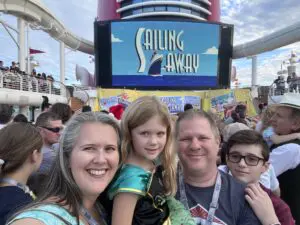 Before I became a Certified Autism Travel Professional, I was already the mom checking restaurant menus, packing noise-canceling headphones, and reminding my son to download more movies than he thought he would need for our flight.
My son is now 16. He is on the autism spectrum, has ADHD, and absolutely loves theme parks. Cruises with waterslides and surf simulators are also a big hit. He seeks out excitement, and we keep that in mind when choosing our vacations.
We also plan for the parts of travel that can be difficult for him. Over years of family trips, we have learned what he enjoys, what might become an issue, and what helps to prepare ahead of time. That experience shapes how I help other families plan travel at Infinite Moments Travel.
Earning my certification through IBCCES was a natural next step. I wanted formal training and a recognized credential to support the work I was already doing with clients.
What my IBCCES certification means
A Certified Autism Travel Professional, or CATP, completes autism-focused education and passes the Autism Travel Competency Exam through the International Board of Credentialing and Continuing Education Standards, known as IBCCES. The IBCCES program includes continuing education and covers subjects such as sensory awareness, traveler and parent perspectives, air travel, cruises, and hotels and resorts.
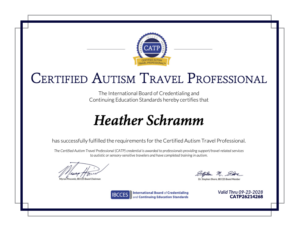 I completed the training and earned a 100% on the exam. I am proud of that accomplishment, especially because the subjects connect so closely to decisions our family has been making for years.
By the time I pursued certification, I had already helped clients navigate travel with autism-related needs. The credential gives families a way to recognize my training alongside my personal experience.
My experience with my son also reminds me to ask questions. What works beautifully for our family may be completely wrong for yours. Understanding your child and their needs comes first.
Loving theme parks and needing sensory support can go together
 For my son, a vacation with plenty of activity can be a great fit. He loves the stimulation of theme parks and the excitement of waterslides and surf simulators on a cruise.
At the same time, certain sounds can be very difficult for him. A crying baby or loud children on an airplane can be especially overwhelming. Enjoying a busy theme park does not mean every busy or noisy environment feels the same to him.
That is why I want to know what a client and their family enjoys as well as what they find difficult. A preference for quiet, a love of thrill rides, or a need for familiar routines each tells us something useful about how to plan.
Preparing for a flight goes beyond packing headphones
Noise-canceling headphones are an important part of our flight preparation. We also remind our son to choose more movies than he expects to watch and download them before we leave.
We cannot count on the plane having a screen, offering movies, or having something he actually wants to watch. Having familiar entertainment ready gives him choices when the sounds around him become difficult.
It is a small detail, but it is exactly the kind of detail that matters to our family. Planning ahead means thinking through how the travel day will actually feel, including the hours before we reach the destination.
Excitement still needs a meal plan
 Our son thrives on routine, and his ADHD also means he can get caught up in the excitement and forget to eat. Then hunger catches up with him, and he can crash hard.
We have learned to think about meals before we reach that point. That includes making time to eat and knowing there will be food he actually likes.
We read menus before making reservations. A restaurant can look wonderful and still be a poor fit for our family. Prix fixe menus, with a set selection of courses, generally do not work well for us because of food aversions.
As he has gotten older, he has become better able to manage these things himself. We do less of the reminding and managing than we used to. Much of that progress comes from what we have practiced together over years of traveling as a family.
Planning for both of our children
We have another child who is not on the spectrum, so our family vacations also involve balancing different interests, needs, and expectations.
That is challenging with any children. One child may be ready for another activity while the other needs something different. We want each of our children to have something to enjoy, and we also want the vacation to work for us as parents.
When I help a family plan a trip, I bring that perspective with me. Understanding one person’s support needs belongs in a larger conversation about what the whole family hopes to experience.
Questions to ask before booking a family vacation
Some of the most useful planning happens before choosing a hotel, ship, or theme park ticket. Depending on your traveler, these are questions worth exploring early:
- Does the destination have an accessibility application or card process, and when should we review it?
- Should we contact the cruise line, hotel, or theme park ahead of time about specific needs?
- Would an introduction to airport security screening help the traveler know what to expect?
- Would preview videos help us prepare for an attraction or identify sounds, lighting, or other effects to discuss?
- Are there suitable food choices, and does the dining schedule fit our family?
- How can we make room for familiar routines and each child’s interests?
Accessibility arrangements need to be checked with the specific provider. For example, IBCCES explains that its accessibility card does not guarantee benefits or accommodations. Understanding the process ahead of time helps families make informed plans.
Preview videos can help a family discuss what to expect, but they cannot fully reproduce an experience or guarantee how someone will feel when they arrive. I use preparation to help us make better decisions and leave room to adjust.
How I help families plan travel with autism in mind
 My planning starts with a conversation about your family. What does your traveler love? What has been difficult on previous trips? What helps at home? Which routines matter, and what would everyone like to do on vacation?
From there, I can help evaluate vacation options, review dining choices, identify questions for travel providers, and discuss preparation for the journey. Those details influence whether a particular cruise, resort, or theme park vacation fits your family.
I earned my certification after years of learning these lessons as a parent. My work now draws on both that experience and my IBCCES training, with your family’s needs guiding the plan.
If you are planning a family vacation and want to talk through sensory needs, food preferences, routines, or balancing your children’s interests, contact me at Infinite Moments Travel. Tell me what your family loves and what you are concerned about, and we can start there.
Common questions about planning travel with autism
Can a child with autism enjoy theme parks or cruises
My son loves both. For our family, choosing activities he enjoys and preparing for his specific sensory and food needs are important parts of the trip. Another traveler may prefer a very different vacation.
What should I tell my travel advisor about my child
Share their interests, sensory preferences, food aversions, important routines, and what has helped or been difficult on past trips. Specific examples help us talk through which options may fit.
Does an accessibility card guarantee accommodations
The IBCCES accessibility card does not guarantee benefits or accommodations. Review the current process with each attraction or travel provider rather than assuming one card or approval works everywhere.